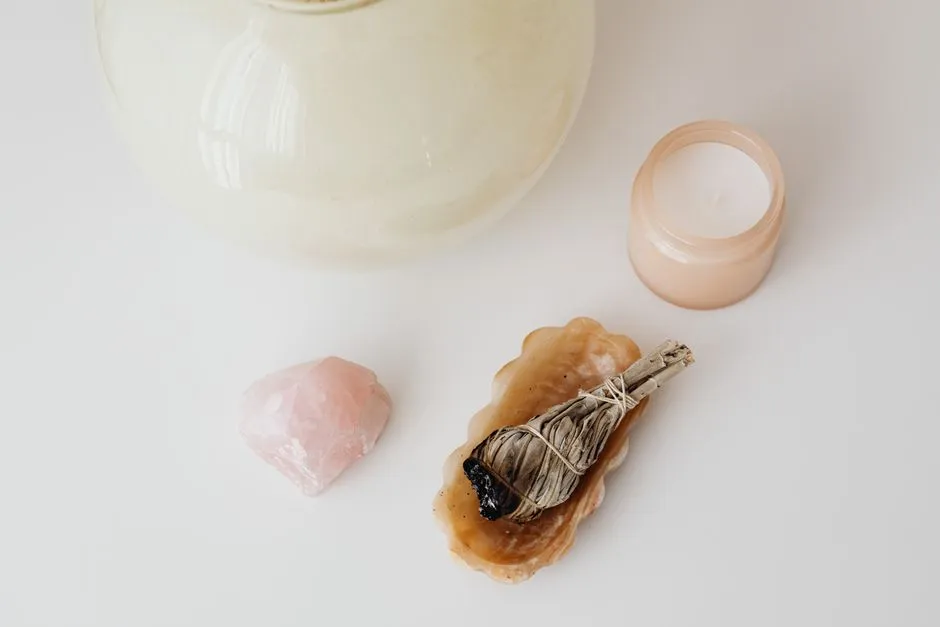
"Cleansing" a crystal is two things at once: literal cleaning, and the symbolic practice of resetting the stone\'s relationship with you. Both deserve to be done well, and most people do neither.
This is the unfussy version.
When to cleanse
- When you first bring a stone home.
- After someone else handles it for more than a moment.
- After it has been actively worked with through grief, illness, or a heavy week.
- Once a month for stones in regular rotation, just as maintenance.
If you cannot remember the last time you cleansed a stone you use daily, it is time.
Methods that work, match the stone
Not every method suits every crystal. Some stones are soft, soluble, or chemically reactive.
Water rinse (cool, brief). Safe for most quartz family stones, agates, jaspers, and tumbled stones with hardness 6+. Hold under running water for 30 seconds, towel dry. Do not water-rinse: selenite, halite, calcite, malachite, azurite, pyrite, hematite, or any raw, fibrous, or porous stone.
Moonlight. Universally safe. Set the stone on a windowsill from sunset to sunrise on or near the full moon. Beautiful, low-effort, and traditional.
Sunlight. Energetically powerful but physically risky. Do not sun-charge: amethyst, rose quartz, citrine (genuine), fluorite, kunzite, aventurine, celestite. Sun fades their color over time. Limit to 30 minutes for stones that tolerate it.
Selenite plate. Place stones on a flat selenite slab overnight. Selenite is considered self-clearing in most traditions and gently resets stones placed on it. The most universally safe method.
Sound. A singing bowl, tuning fork, or held tone moved over the stones for a minute. Excellent for fragile or porous crystals that cannot be touched by water or salt.
Smoke. Pass the stone through smoke from cedar, pine, mugwort, rosemary, or another locally appropriate herb. Avoid white sage if you are not from a culture that uses it traditionally, there are many alternatives.
Salt. Effective but harsh. Dry salt only (never salt water for soft stones), and rinse the stone afterward. Skip salt entirely for soft or metallic stones.
Charging, what it actually means
Charging is the second half. After clearing, you give the stone a clear assignment again. Hold it in cupped hands. Speak (out loud or silently) what you are working with it on. That is charging.
You can also "charge" stones by leaving them in moonlight, sunlight (when safe), on a quartz cluster, on selenite, or in soil for a few hours. None of these are required. The intention-setting is.
How often is enough
A gentle, sustainable rhythm:
- Working stones (the one in your pocket this week): cleanse weekly, recharge with intention each Monday morning.
- Display stones (the cluster on the shelf): cleanse monthly with smoke or sound.
- Sleep stones (anything on the nightstand): cleanse on the full moon, every month.
If you forget for a while, no harm is done. The stones are patient.
Signs a stone is asking to be cleansed
Many collectors describe the same handful of signals. The stone feels duller in the hand than usual. Its color appears less alive. It seems to slip out of your awareness when you are working with it. A previously clear pairing feels muddled. None of these are scientific. All of them are the kind of small perceptual cues that practice teaches you to trust.