Properties
| Category | Tectosilicate minerals |
|---|---|
| Formula | Silica (silicon dioxide, SiO2) |
| Crystal system | Trigonal |
| Color | Light pink, rose |
| Crystal habit | Massive (rose quartz); hexagonal (pink quartz) |
| Cleavage | None |
| Fracture | Conchoidal |
| Tenacity | Brittle |
| Mohs scale hardness | 7 |
| Luster | Vitreous |
| Streak | White |
| Diaphaneity | Translucent (rose quartz); transparent (pink quartz) |
| Specific gravity | 2.65 |
From the Wikipedia article
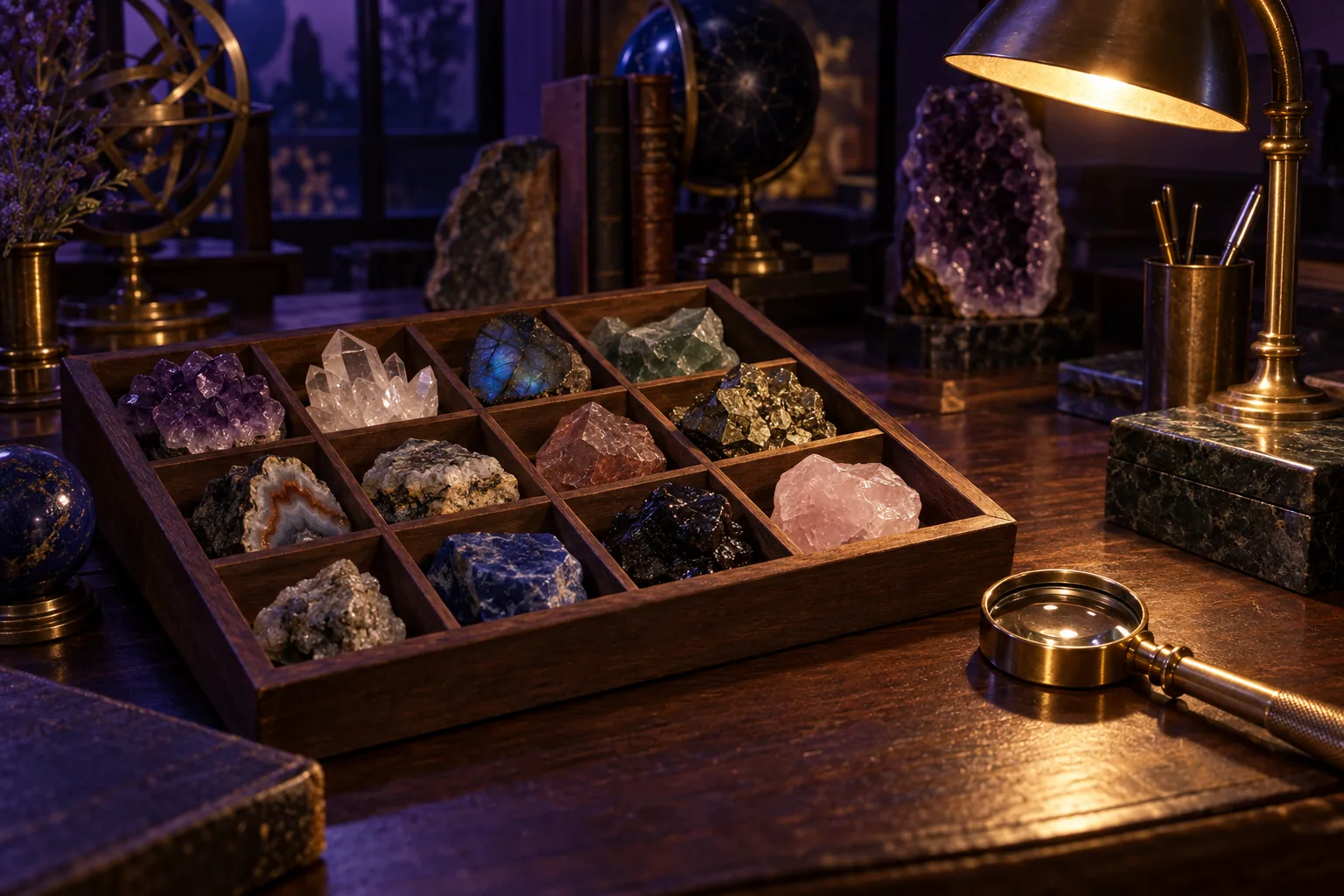
Rose quartz is a pink, translucent variety of quartz with a massive habit. Its color is due to microscopic inclusions of a fibrous silicate mineral related to dumortierite. Previously, the color was believed to be due to inclusions of rutile. Rose quartz is dichroic and may display asterism when cut into spheres or cabochons. It formed at very high temperatures of 400–700 °C (752–1,292 °F) in the quartz cores of pegmatites. Rose quartz is commonly used in lapidary for carvings and as a semiprecious gemstone.
Source
Source record: crystal-compendium/rose-quartz/minerals.json. Fetched from English Wikipedia by the operator 2 October 2026.
https://en.wikipedia.org/wiki/Rose_quartz — revision id 1363126039. Text and properties from Wikipedia, licensed CC BY-SA 4.0.